
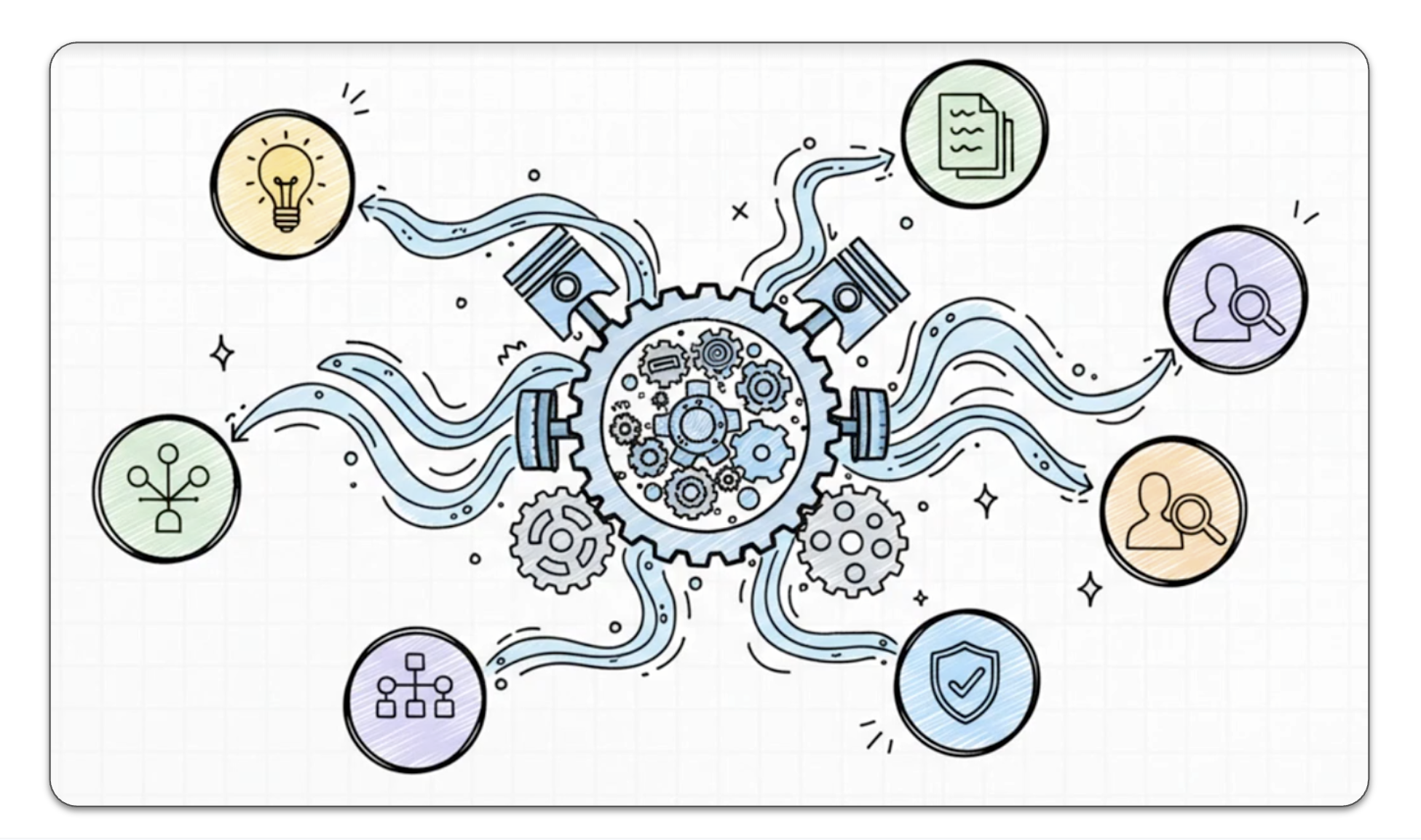
The discipline of instructional design that once enabled training to scale is now the primary constraint on how quickly organizations can grow talent.
ADDIE gave instructional design its legitimacy. For more than fifty years, its disciplined process of analyzing, designing, developing, implementing, and evaluating has produced rigorous, effective training. Entire careers were built around mastering this framework and the many models it inspired.
But sequential rigor has become a liability.
The same step-by-step discipline that once ensured quality now ensures delay. Not because rigor is wrong, but because enforcing linear progress no longer matches how learning must be created in partnership with AI. Clinging to sequential approval chains prevents organizations from capturing AI’s real value, which is rapid iteration, synthesis of multiple sources, and continuous, even last-minute, refinement of the learning experience.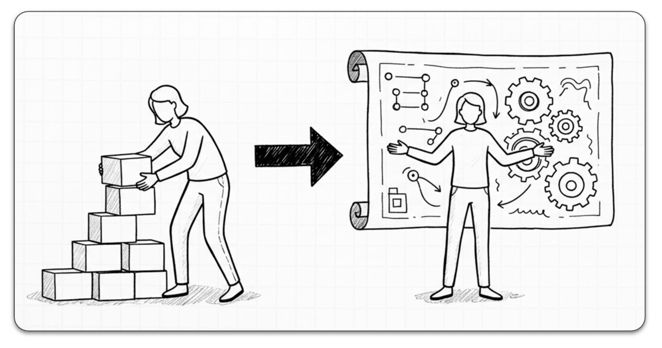
Outside of L&D, AI has raised expectations for efficiency and scale across the business. Compounding this expectation, nearly 39 percent of skills throughout the workforce are expected to change within five years (World Economic Forum, 2025). Together, these forces are placing pressure on L&D to evolve faster than its current processes and mindsets comfortably allow.
This has brought instructional design to an inflection point. Not because its standards are wrong, but because its processes were built for a slower world. The central challenge is no longer how to optimize content production. AI is already accelerating that work. The real challenge is how to design experiences that build and validate skills at the pace the business now demands, without abandoning the rigor that defines the profession.
Fluid Design addresses this challenge directly. It is not another process to layer onto existing workflows. It is a way of working where iteration, synthesis, and creation happen in parallel, and where professional judgment, not a prescribed sequence, determines what comes next.
The Shift: From Knowledge Transfer to Capability Building
As AI makes knowledge-level learning easier and cheaper to produce, the value of content inevitably declines, along with the value of instructional work focused primarily on creating it. This shift is already underway. The question for instructional designers is not whether it will happen, but how to respond.
The opportunity is to move up the cognitive ladder, from supporting recall and comprehension to developing judgment, decision-making, and applied skill. That shift requires rethinking both how and what we design. Rather than assembling modules for information consumption, designers must focus on creating simulations where learners practice in realistic, contextualized situations and where performance can be observed and validated.
A simulation places a learner inside a realistic situation and asks them to act. A new manager navigates a difficult performance conversation. A sales rep works through a complex negotiation with a skeptical buyer. A frontline supervisor responds to an unexpected operational failure. In each case, the learner must make decisions, experience consequences, and adapt. This is fundamentally different from reading about how to handle those situations or answering questions about what they should do. The learning happens through doing, and it is measurable.
The shift creates real value. Learners gain personalized feedback and credible evidence of what they can actually do, and organizations gain clearer visibility into skill readiness. Together, this provides a more reliable way to build and manage talent pipelines. Designers, in turn, move into work that is more strategic, more defensible, and far harder to replace.
This shift toward simulation-based learning is not a matter of preference or trend. It is grounded in a strong body of research. A 2020 meta-analysis (Chernikova et al., 2020) synthesizing 145 studies found that simulations produced large effect sizes, approximately g = 0.85, for complex competencies such as critical thinking, problem-solving, and decision-making. These are not marginal gains. In practical terms, learners who engage in simulations outperform those in traditional learning conditions by nearly a full standard deviation.
For instructional designers, this moment represents a meaningful career shift. It is a move from content assembler to experience architect, and from information delivery to capability building. The future belongs to designers who can create intellectually rigorous, emotionally engaging experiences where learners not only learn about their work but also practice doing it.
Why Process, Not Talent, Is the Real Constraint
The sequential processes that once ensured quality now struggle to keep up with constant change. ADDIE-like models were designed for stability, predictability, and long planning cycles. That is no longer the reality most designers operate within, and certainly won’t work for building simulations.
The challenge is not simply speed. It is about what can be known in advance. In content-based design, objectives, structure, and assessments can be fully specified before development begins. In simulation-based design, they cannot. Decision points, feedback loops, scoring logic, pacing, and realism only reveal themselves once the experience can be played.
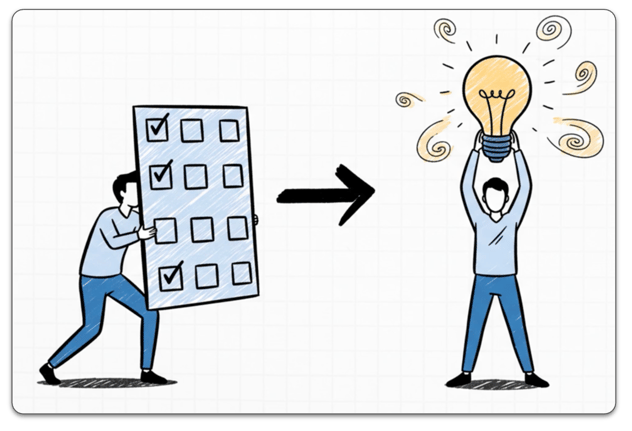
Each prototype exposes flaws in assumptions made during analysis and design, forcing rapid revision across all phases simultaneously. Simulation design collapses the distance between analysis, design, and development. Prototyping becomes the unit of progress, not documentation, and sequential handoffs become a structural constraint rather than a safeguard.
Yet the models most organizations rely on were never designed for this kind of work. The field has accumulated dozens of formal instructional design models, plus countless organizational variations. Each added review step or handoff was well-intentioned. Collectively, they reinforced workflows that favor control and completeness over speed and adaptability. These models are deeply embedded in how designers think about their work. They shape roles, approval cycles, and professional identity. They are not easily replaced.
Consider the Successive Approximation Model, which attempted to address the shortcomings of sequential models by emphasizing iteration, early prototyping, and continuous feedback. It moved the field in a healthier direction.
In short, even with SAM, analysis, design, and development still exist as separate phases. Iteration happens within phases, but designers still move through them in sequence. And without the right technology, the rapid cycles SAM envisions remain constrained by human capacity to execute them.
What is needed instead is an environment where designers can move fluidly between analysis, design, and development, regardless of where they start. The ability to reach a prototype early is critical. Revisions to learning objectives, outcomes, or the flow of activities should be expected, not managed around. They are how the design improves.
This is what Fluid Design addresses. The ability to shift direction mid-design, update objectives when the prototype reveals something unexpected, or regenerate an experience based on reviewer feedback without losing momentum or starting over.
The Brain Metaphor: How We Actually Create
Here’s something every learning professional knows: your brain doesn’t process thoughts sequentially.
Right now, as you read this, your visual cortex is processing the words on screen. Your memory centers are connecting these ideas to experiences you’ve had. Your prefrontal cortex is evaluating whether this makes sense. Your emotional centers are reacting with interest, skepticism, or excitement. Your motor planning prepares your next action: keep reading, skim ahead, or close this.
You don’t consciously process each of these one after the other, like items on a to-do list. That’s not how the brain works.
The best instructional designers have always worked this way, even when they were required to document their work in rigid, linear phases. They move fluidly between understanding and creating, between analysis and synthesis, shifting focus as the design itself reveals what is needed next.
The limitation was never how designers think. It was the tools available to support that thinking. Sequential processes emerged because they were the only reliable way to coordinate complex work before technology could handle the mechanical and administrative burden. That constraint no longer exists.
Fluid Design describes how designers work when technology removes sequential constraints rather than imposing them. It reflects how human cognition actually functions: nonlinear, exploratory, and emergent.
What Fluid Design Makes Possible
For instructional designers, Fluid Design changes what the job feels like and what it produces.
The most immediate change is throughput. Work that once required weeks of sequential handoffs, approvals, and revisions can move faster because analysis, design, and development are no longer waiting on each other. A designer can start building before every question is answered, let the prototype surface what needs to be known, and refine in response to what actually happens rather than what was predicted. More gets done. It gets done faster. And because iteration is built into the process rather than bolted on at the end, the quality of what gets produced is higher.
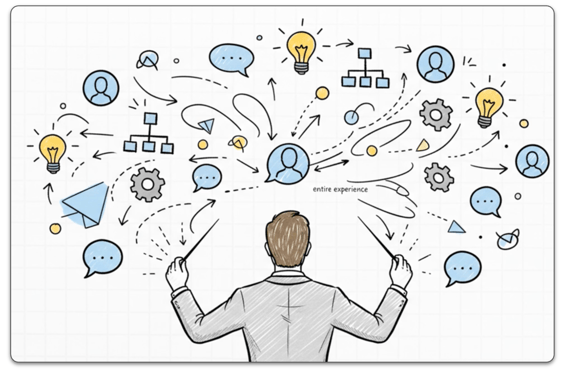
The second change is credibility. One of the persistent frustrations in L&D is the gap between the pace of design and the pace of the business. Stakeholders ask for something in three weeks and get it in three months. Fluid Design closes that gap.
When designers can respond to a business need at the speed the business is moving, the conversation changes. L&D stops being a bottleneck and starts being a partner. That shift in perception is hard to overstate. It takes years to build and can transform how the function is valued inside an organization.
The third change is relevance. Designers remain entirely in control of the work that matters: the learning strategy, the scenario design, the feedback architecture, the decisions about what to measure and why. What changes is who handles the mechanical execution. AI takes on the research synthesis, the content drafting, the structural assembly. Designers direct that work, evaluate it, and shape it into something worth learning from. The expertise doesn’t diminish. It gets applied to harder problems.
None of this makes the job easier in the sense of requiring less skill. It makes it harder in the right ways. The work demands sharper judgment, clearer thinking about what performance actually looks like, and greater comfort with iteration over completion. Designers who develop those capabilities will find themselves doing work that is more consequential, more visible, and considerably more difficult to replace.
This is where instructional design is heading. Not because AI is forcing the profession to change, but because the problems organizations need solved have outgrown the tools the profession has been using. Fluid Design is the response to that mismatch. The harder challenge is not learning new tools. It is letting go of the habits that made older ones feel safe.
Letting Go: Underlying Mindsets
To fully embrace Fluid Design, designers will need to let go of certain mindsets that traditional processes reinforced. This isn’t about abandoning professional standards. It’s about acknowledging that some of what felt like rigor was actually ritual.
The comfort of linear progress. There’s genuine satisfaction in checking off completed phases. Analysis done. Design approved. Development in progress. Each checkmark provides psychological safety and visible evidence of forward movement. Fluid Design doesn’t offer that same reassurance. Progress becomes less about completion and more about emergence. You understand the design more deeply but can’t always point to what’s “finished.” When stakeholders ask “where are we?” the answer shifts from “we’re 60% through development” to “we have a working prototype, and we’re refining based on what we’re learning.”
The need for upfront certainty. Traditional models promise that if you plan thoroughly enough at the beginning, you’ll know what the final product will look like. This promise was always somewhat illusory. Every designer has experienced the moment when a carefully planned course meets actual learners and reveals gaps the planning never anticipated. Fluid Design abandons this fiction. You start with direction, not destination. The learning experience emerges through iteration, and what you discover in one space reshapes your understanding in another.
Manual craft as identity. Many designers take legitimate pride in personally authoring learning content. Writing every interaction, crafting every scenario, selecting every example. This craft represents expertise, and for many, it’s central to professional identity. Fluid Design shifts the designer’s primary work from execution to orchestration. The value comes from recognizing when a scenario needs more emotional complexity or when learning objectives aren’t quite right, from shaping the experience rather than typing every word of it. This is still craft. It’s the craft of discernment and knowing what good looks like. But it feels different, and that difference can register as loss even when the outcomes improve.
Process as safety. Following established steps provides protection from criticism. If you completed every phase of ADDIE properly and the learning still didn’t work, you can point to the process. You followed the model. Fluid Design removes this shield. When you move fluidly between spaces based on what the design needs, there’s no prescribed sequence to hide behind. Your judgment becomes visible. This exposure is uncomfortable, but it’s also liberating. You’re no longer defending your adherence to process but rather the quality of your design decisions.
What makes these mindsets difficult isn’t that designers are resistant to change. It’s that these mindsets accumulated for legitimate reasons. They helped manage risk, demonstrate professionalism, and maintain quality in organizations that didn’t always understand or value instructional design work.
The transition isn’t easy. But neither is staying in processes that increasingly can’t deliver what the business needs.
Where This Goes Next
Understanding why Fluid Design is necessary is only the first step. The harder and more practical question is what it actually looks like to work this way, and what makes it executable in the context of building simulation-based learning.
That requires both a platform that removes sequential constraints and a clear picture of how a designer moves between analysis, creation, and evaluation without losing coherence or quality. How do you do that? Read Part 2 to find out!
Sources
Mike Vaughan is the CEO of The Regis Company and Editor in Chief of The Thinking Effect, bringing over 30 years of experience at the intersection of AI, cognitive neuroscience, and experiential learning, including a Master's in Cognitive Neuroscience from Middlesex University, London. He is the author of The Thinking Effect and the architect of SimGate, the first AI-enabled Skill Practice Platform designed to make simulation-based learning scalable for any organization.
Chernikova, O., Heitzmann, N., Stadler, M., Holzberger, D., Seidel, T., & Fischer, F. (2020). Simulation-based learning in higher education: A meta-analysis. Educational Psychology Review, 32(3), 743-781.
LinkedIn, The Work Change Report (LinkedIn Economic Graph, 2023), https://economicgraph.linkedin.com/research/work-change-report.
Papert, Seymour. Mindstorms: Children, Computers, and Powerful Ideas. New York: Basic Books, 1980.
World Economic Forum. (2025). The Future of Jobs Report 2025. https://www.weforum.org/publications/the-future-of-jobs-report-2025/