
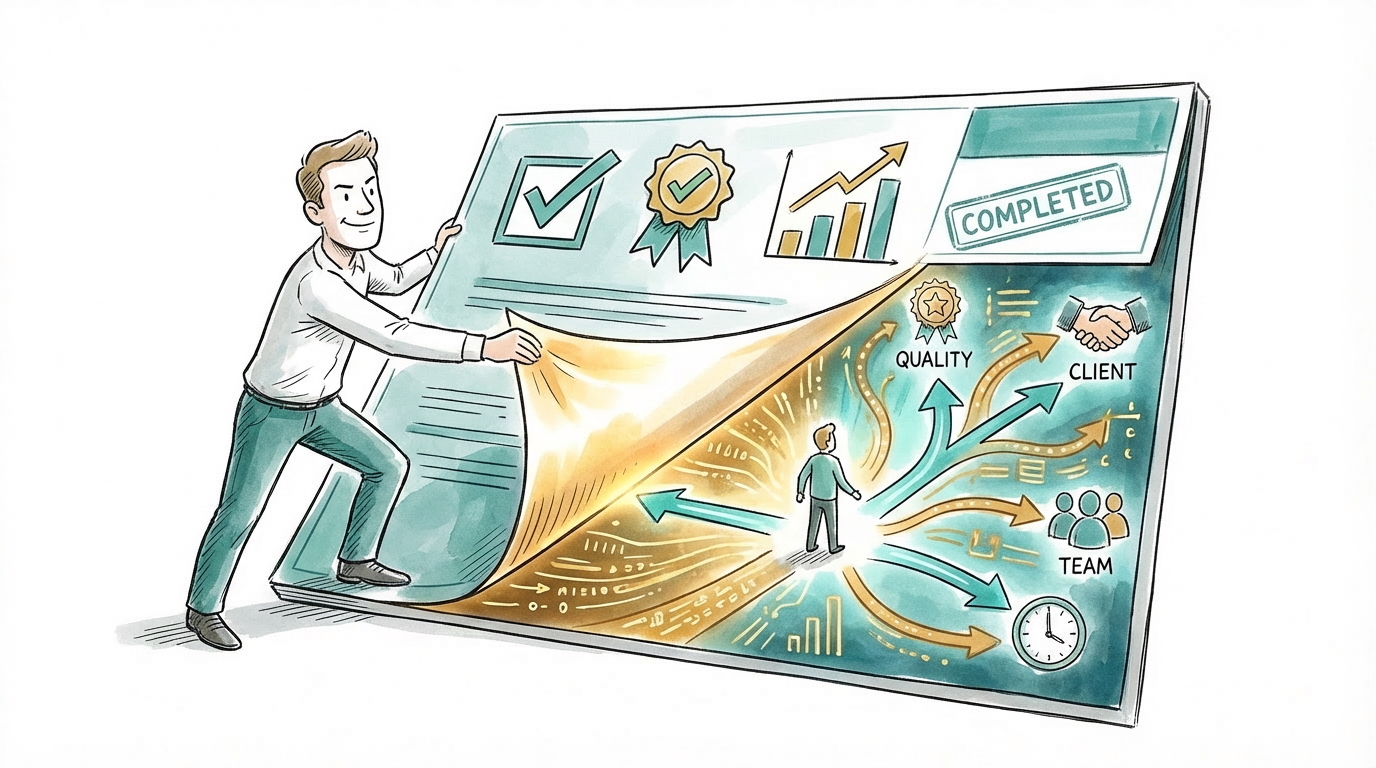
The Next Layer of Proof: How Simulation-Based Learning Closes the Readiness Gap
Part 1 introduced a fundamentally new approach to instructional design. Part 2 introduced the platform that makes it possible. Together, they produce a new kind of learning experience: a microworld simulation where learners demonstrate what they know by confronting realistic situations and challenges, and how they respond reveals far more than an assessment, rating, or certification.
Which raises the question this part is built around. How do you know if someone is actually ready? You can observe them on the job, but that is high-stakes and inconsistent. You can infer readiness from their history, but inference is not demonstration. You can ask them to self-rate, but self-perception is a notoriously unreliable measure. Or you can put them into a realistic experience that captures how their thinking develops over time, in context, under pressure. That is what microworld simulations make possible. And the data they produce changes what L&D can credibly claim about readiness.
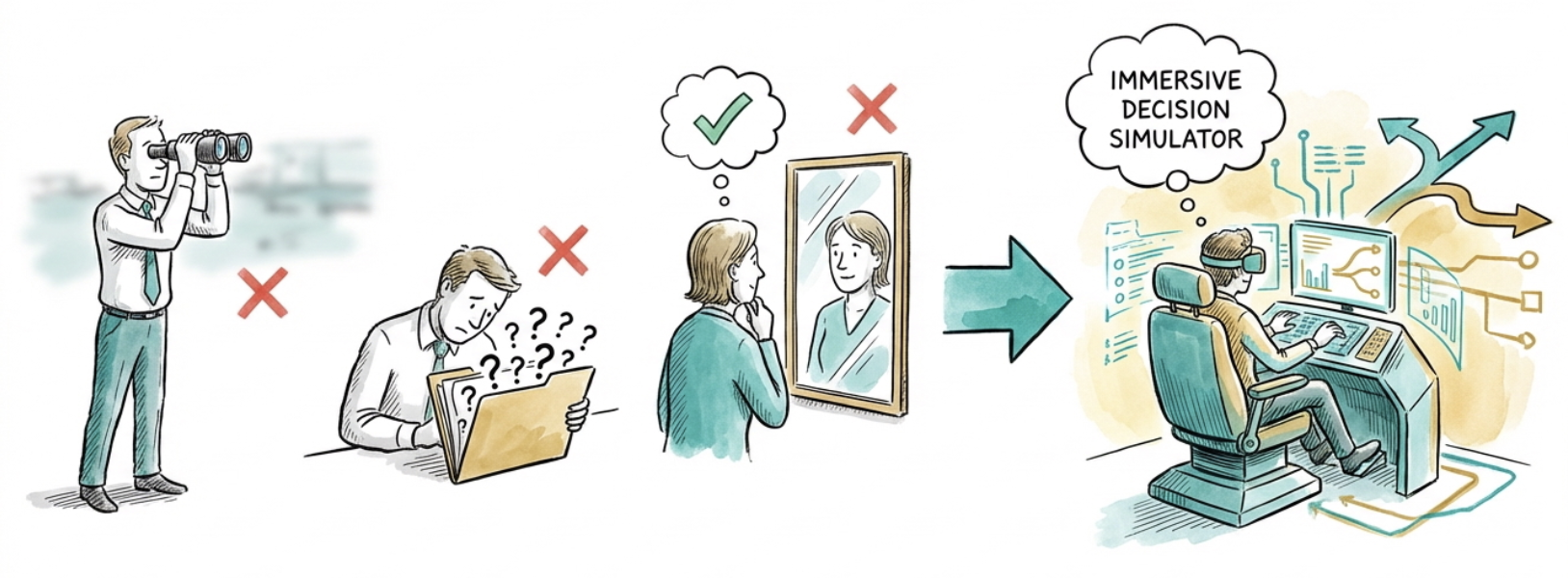
Why Skills Tracking Fails at the Point That Matters Most
The core failure of skills tracking is not technological. It is conceptual. Every method in the traditional toolkit measures a proxy for readiness rather than readiness itself. Self-assessments measure self-perception. Manager ratings measure someone else's perception. Certifications measure test performance. LMS completions measure seat time. Even the most sophisticated AI-powered skills ontology, at its foundation, is cataloging claims about capability, not demonstrations of it.
Newer skill intelligence platforms represent a genuine step forward. Rather than relying on self-reported skills, they use AI to infer capabilities from work signals: resumes, project assignments, training records, career trajectories. Eightfold AI analyzes billions of talent profiles to predict what skills someone likely has based on patterns across similar roles. TechWolf extracts tasks from actual work data and maps them to skills using specialized AI models. These platforms have moved the industry from self-reported claims to AI-inferred claims, which is a meaningful improvement.
But inference is not demonstration. Project assignment does not equal successful execution. A career trajectory that resembles someone who has a skill is not proof that the skill exists at the level required. The more sophisticated platforms acknowledge this gap themselves, distinguishing between validated skills and likely skills. Clients have reported placing people into critical roles based on inferred skills that turned out not to exist at the level needed. The proxy has gotten smarter, however, it is still a proxy.
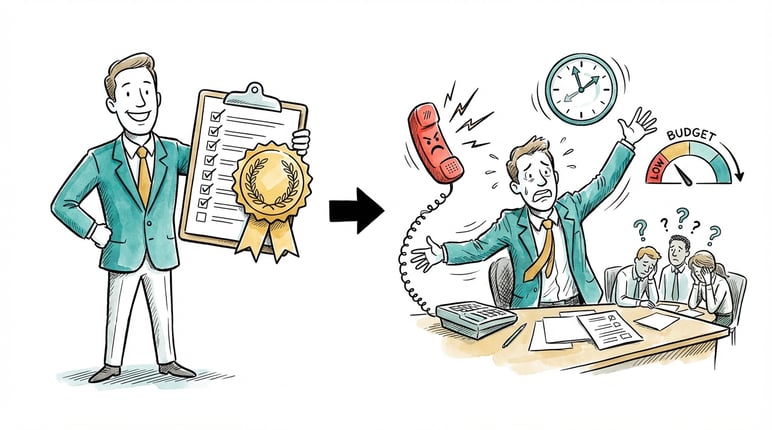
Consider a project manager who holds a certification, rates themselves advanced in stakeholder management, and has completed coursework in agile methodology. Their skills profile looks strong. But can they navigate a scope change at 80% project completion while managing a demoralized team, a demanding client, and a shrinking budget? Can they make the right trade-off between delivering on time and protecting quality? The skills profile says nothing about this. It cannot, because skills tracking was never designed to capture integrated performance under realistic conditions.
Academic research supports this critique. A 2024 analysis in the Journal of Medical Ethics argued that competency frameworks atomize integrated performance into discrete, measurable pieces, losing sight of holistic expertise. A Nature Human Behaviour study on skill dependencies found that real-world skills don't operate independently. They require prerequisites, create synergies, and produce emergent capabilities when combined. Traditional systems treat skills as independent checkboxes. In reality, when someone addresses a problem or spots an opportunity, they are drawing on multiple skills simultaneously, working interdependently and often unconsciously. That is the nature of real performance, and it is what traditional tracking was never built to see.
Additional systemic problems remain unresolved. Skills decay is invisible: a certification earned years ago persists as a permanent record even as the underlying capability atrophies. Taxonomy maintenance is enormous and ongoing. Skills inflation is rampant as organizations face pressure to demonstrate talent investments. And the gap between intention and reality is wide: only 34% of workers feel supported by their organization's skill development efforts, and 58% of companies still plan to fill skills gaps through external hiring rather than developing the people they already have.
From Tracking to Validation
If the only true way to know whether someone can run a project is to have them run a project, the challenge is clear. Live performance assessment is high-risk, expensive, and not scalable. You cannot put every aspiring project manager in charge of a significant engagement to see what happens.
But you can simulate it. And when you do, something important happens: you don't just learn whether someone has a skill, you learn how they use it. You see whether they understand the balance points and trade-offs that define real performance.
Simulation-based skill validation asks a fundamentally different question than skills tracking. Instead of 'What skills does this person have?' it asks 'What does this person do when those skills are required under realistic conditions?' Within a well-designed simulation, a participant demonstrates not just isolated competencies but integrated judgment: Do they understand what levers drive the outcome? Can they balance competing priorities? Do they recognize when to hold firm and when to flex? These are the questions that determine readiness, and they can only be answered through observation of behavior in context.
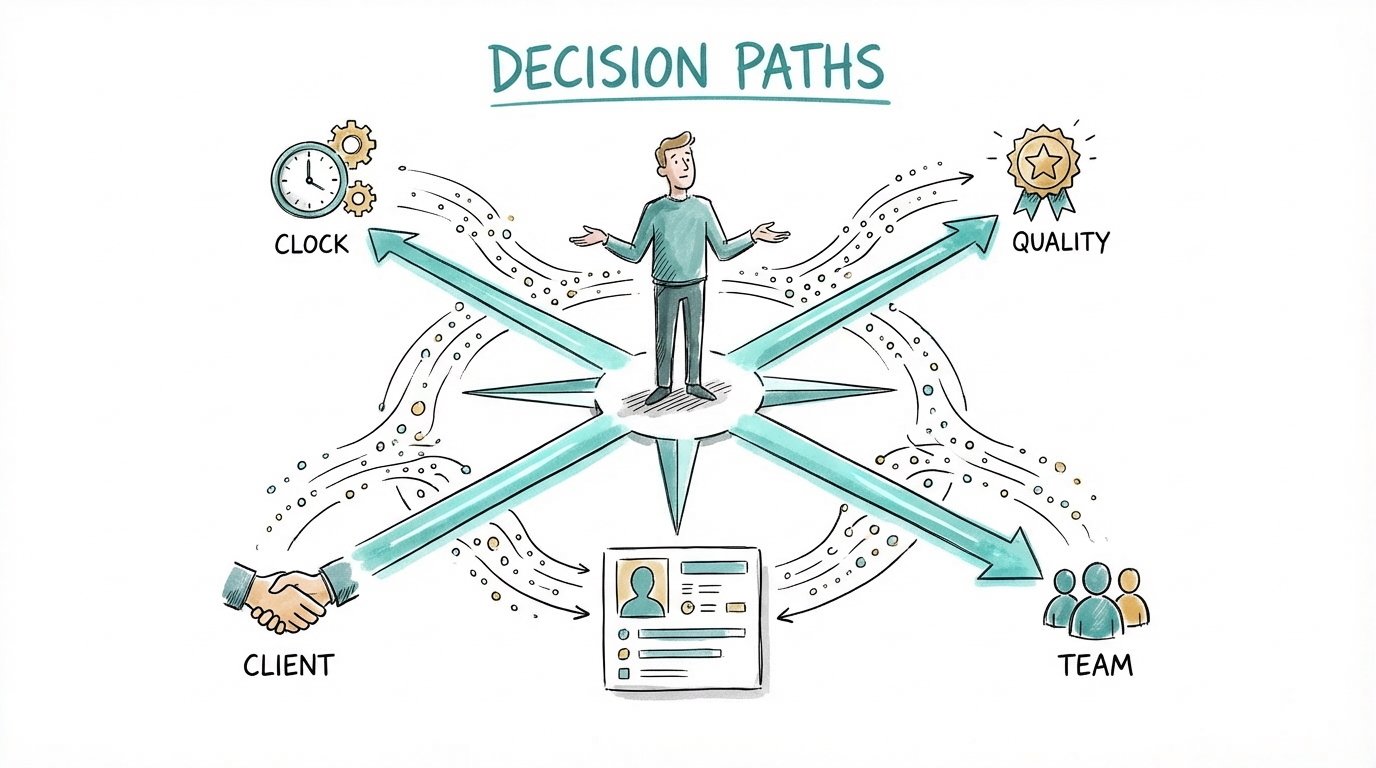
Until recently, the barrier to simulation-based validation was practical. Simulations were expensive, time-consuming to build, and difficult to scale. That barrier is falling. New platforms and emerging design methodologies are enabling organizations to build rich, practice-based simulations faster and at dramatically lower cost. The behavioral data captured through these simulations provides the evidence layer that traditional metrics and skill intelligence platforms cannot. This is not about replacing those systems. The data from self-assessments, manager ratings, certifications, and AI-inferred skill profiles all remain valuable inputs. Simulation-based validation adds the next layer of proof: the layer that shows what someone actually does when the skills are needed.
Behavioral Telemetry: The Data Layer That Changes Everything
What makes simulation-based skill validation transformative is not just the realistic decisions and scenarios. It is the data. Traditional assessments produce thin data: a score, a rating, a completion status. Simulations, by contrast, capture a continuous stream of signals that reveal how a person thinks, decides, and acts in real time as they navigate realistic challenges. This is what behavioral telemetry makes possible.
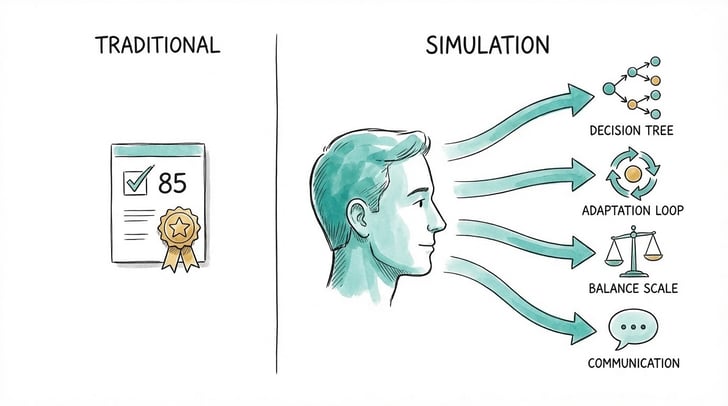
First, it captures decisions and decision patterns: not just what someone chose, but when they chose it, how long they deliberated, what information they sought before deciding, and how their decisions evolved as conditions changed. Second, it tracks adaptive behavior: how a participant incorporates feedback, whether they course-correct when early choices produce negative consequences, and how quickly they recognize and respond to shifting dynamics. Third, it reveals perspective and framing: does the participant approach a challenge from a financial lens, a people lens, a client lens, or some integration of all three? The perspective they bring tells you as much about their readiness as the decision they make.
AI adds further depth. As simulation platforms evolve, they will extend telemetry to analyze written and spoken communication within the simulation for tone, clarity, and persuasiveness. Input from computer vision and audio will capture nonverbal signals such as confidence, stress, and engagement, contributing to a fuller picture of how someone performs under pressure. These capabilities are close.
The result is a dataset orders of magnitude richer than anything traditional skills tracking produces. Instead of a binary 'has this skill / doesn't have this skill,' behavioral telemetry provides a multidimensional profile of how someone applies their capabilities when it matters. It captures not just competence but judgment: the ability to weigh competing priorities, integrate information from multiple sources, and make sound decisions in the face of ambiguity. Judgment is what separates someone who knows about project management from someone who can actually manage a project.
What This Means for L&D Professionals
For L&D professionals, this shift requires a willingness to challenge some deeply held assumptions. The assumption that tracking skills equates to developing them. The assumption that self-assessments and manager ratings, however well-structured, can capture readiness. The assumption that completing a course means someone has learned.
None of those assumptions were unreasonable given the tools available. They were reasonable responses to a measurement problem that couldn't be solved any other way. The problem can now be solved differently.
Simulation-based skill validation closes the gap that skills tracking never could. It measures what people do, not what they say they can do. The data it produces, how someone makes decisions, adapts to feedback, balances competing demands, and communicates under pressure, provides a more credible picture of readiness than any proxy measure can.
That shift also changes the conversation L&D can have with the business. The question is no longer 'what skills do our people have?' It is 'are our people ready?' And the only credible way to answer that question is to watch them perform.
For designers who have spent careers trying to connect learning to performance, that capability is worth paying attention to. It is the closest the profession has come to a direct line between what gets built and what can be proven.
Sources
Mike Vaughan is the CEO of The Regis Company and Editor in Chief of The Thinking Effect, bringing over 30 years of experience at the intersection of AI, cognitive neuroscience, and experiential learning, including a Master's in Cognitive Neuroscience from Middlesex University, London. He is the author of The Thinking Effect and the architect of SimGate, the first AI-enabled Skill Practice Platform designed to make simulation-based learning scalable for any organization.
Eightfold AI. AI-Powered Talent Matching: The Tech Behind Smarter and Fairer Hiring. eightfold.ai/engineering-blog/ai-powered-talent-matching-the-tech-behind-smarter-and-fairer-hiring
Eightfold AI. Trust but Validate. eightfold.ai/blog/trust-but-validate
Journal of Medical Ethics (2024). Why Competency Frameworks Are Insufficiently Nuanced for Health Equity Teaching and Assessment. journalofethics.ama-assn.org/article/why-competency-frameworks-are-insufficiently-nuanced-health-equity-teaching-and-assessment/2024-01
Nature Human Behaviour (2024). Skill Dependencies. nature.com/articles/s41562-024-02093-2
TechWolf. How AI Maps Workforce Skills Without Bias. techwolf.ai/resources/blog/how-ai-maps-workforce-skills-without-bias
TestGorilla. State of Skills-Based Hiring 2025. testgorilla.com/skills-based-hiring/state-of-skills-based-hiring-2025
The Regis Company